Showing posts with label discussion. Show all posts

Friday, September 5, 2014

Discussion: How Do You Travel with Books?

Hey guys, it's been forever since I've done a discussion post! Though I usually talk more about the actual text and story aspects of books in these discussions, this time my question concern the books as objects. I've done quite a bit of traveling this summer (more on that here) and my book-loving were both a source of excitement (visiting awesome bookstores! Meeting authors! So many great books! So much cheaper than at home!) as well as a problem when it came to packing.

When I left for New York City, I packed only one paperback plus my Kindle. I knew I'd buy a ton of books and other stuff and I wanted to keep my suitcase as empty as possible. But already after that first week, I had like a dozen books. A few more were added in New Orleans. At the airport, my suitcase was exactly the allowed 50 pounds. But I knew there'd be more books added in California (San Francisco, I shall one day write an Ode to your book stores). In the end, my sister and I both bought a carry-on each - to be filled with books. Only books. To the brim. Plus a few stuffed in elsewhere.


I always need something to read when I'm traveling, even if it's just a bus or train ride. I need to know that if I have to wait for something (and let's face it, airports mean loads of waiting) I can just pick up my book. I can make my own bubble of comfort and disappear into a story. I like to read at the beach, at a café, basically wherever. But that also means lugging around books all the time. Weight. Space taken up. And even though I love print books, the Kindle comes in damn handy at those times. The problem is just that the battery of my Kindle Fire only works for like 8 hours, even if I have the light turned way down. So I still need a paperback with me, too.

How do you handle this problem? Do you have a Kindle, and do you use it for travelling? Are you a print-books only kind of person? How many books do you take with you when you travel? Do you worry about damage to the books (I sure do)? Do you like to buy books abroad? What was your craziest or most embarrassing book-related traveling experience? Let me know in the comments :)

Friday, January 10, 2014

Discussion: Book Nervousness

Hello dear people who read my blog and welcome back to another bookish discussion! In case you haven't noticed yet, there's now a page (link below the header) where there's a link list to all the discussions I've done in the past. You know, if you want to browse.

Anyway, today I'd like to talk about this weird sort of nervousness or trepidation that is sometimes part of cracking open that next book. Or settling on the book. Taking the leap. Bracing yourself to fall into a new story, a new life, a new world.

I don't get this nervousness with every book. Sometimes I just feel like reading it, crack it open, am sucked in immediately and feel comfortable. Other times, I'm almost a bit afraid. What if I don't like it? What if I'm left trying to swim in the deep end because I'm thrown into a strange world where I don't know the rules yet? What if I don't like this book? If it's a review book, will not liking it make me feel guilty?

With series, I tend to get it more often. I read the first book and I immediately want need must have the sequel. A year later, it's out. Maybe I buy it immediately. Maybe not. Even if I buy it, it might end up on my shelf for a few weeks, never mind how much I had to have it right this instant. What if it's not as great as the first/last book? What if I've built up the first book in my head and it wasn't all that awesome? What if I don't remember what happened at the end because I've read a few dozen or even a hundred other books since? What if I don't remember the freaking characters' names and who's who? That's why I often re-read the second half of the previous book before going into the next one.

There are also times when I feel like my own contrary nature is keeping me from a book. Let me explain: sometimes I push away / put off a book or don't listen to a band even though I half-know that I will love it. It's like denial of a desire, or me wanting to punish myself for some reason by not giving myself something I'll enjoy. I might pass it a dozen times in the book store and want to buy it, be drawn to it... but for some reason I always end up getting a different one.
Two examples? I was so sure that I'd never read Mara Dyer or Shatter Me. They were two of my favorite books in 2013 when I finally caved in and read them, about 2 years later. Why am I doing this? Does anyone else have that problem? It's like I'm afraid of the profound effect a good book can have on me.
Despite all that though, NOT having a book I'm reading immediately after finishing the last one makes me even more nervous! The next day at the latest, I have to start a new one.

What about you? Do you ever get this book-nervousness thing? Any ideas why? Has it something to do with specific books? What do you do about/against it? Or am I just a bit cray-cray?

P.S.: I'm visiting a friend in Belgium at the moment (this post is pre-scheduled), so I probably won't get around to answering comments until Monday.

Friday, December 13, 2013

Discussion: Book Turn-Offs, Part 1

It's been a while since I've had a discussion going here, and this is a topic I've wanted to tackle for a while. I want to split the discussion of book turn-offs up into at least two posts, one dealing with turn-offs in the description of the book and another that is about what's on the cover. Clarification: this is more about what makes me not want to read a book in the first place, not about stuff that annoyed me while I was reading a specific book!


Today I want to talk about book descriptions / the summary on the back of the book or on Goodreads etc. The elements mentioned below represent my personal opinion and the list isn't meant to be complete or final. I'm a moody person, so they can change, but many of these really have been grating on me for a while. Also, you're very welcome to defend what's a turn-off for me but a promise of awesomeness to you, or add your own deal-breakers to the list!


Turn-off #1: it's too vague
This is a problem if the description is so general that it resembles that of a gazillion other books in the same genre. I don't want to feel as if I'm re-reading a story I already know. I get that it's to avoid spoiling the mystery but often it doesn't give me enough clues/details to become interested in the first place. Possible remedy: reviews pointing out an element in the book I was not expecting and find totally awesome. I never would have known about that without the review though, so the description is a fail.

Turn-off #2: prophecies
I think I liked those when I was in my early teens, but now I have a huge aversion to any mention of them. They are fatalistic, I find them week as a plot element/character motivation, and they are often bound-up with a love story of two people being 'destined' for one another. Sorry, but there should be more to two characters' romance than simple destiny that says they must be together because "so 't is written".
There are exceptions here, but usually I don't like these books. One reason is that they also often feature the next item on the list.

Turn-off #3: the hero(ine) is So Special
I get the need for this. I do. It's interesting to read about characters that are different, that have abilities normal people don't. Hell, I love fantasy so that's almost always a feature. But what I mean here is the way this difference is treated in the book/hinted at in the description. Some mysterious past (often there's a mystery surrounding parents/legacy and use of the orphan plot), an idea that this person is unique and destined for greatness and to save the world / her race / restore balance. What bugs me is that the specialness is often a bit unclear for large parts of the book or is not properly rooted in the personality of the character and their development during the book. I've found such 'special' characters rather bland once you take away their abilities. Or they are simply special Because Of Reasons.
I often see this 'specialness' as a criticism aimed at female characters, but I think gender doesn't matter here and I've also come across males of the same type.

Turn-off #4: instant but inexplicable connection
What I just mentioned above is also why formulations such as '(s)he feels inexplicably attracted to the new guy/girl/mysterious stranger' have begun to bug me lately. I have no problem with instant attraction, but why does it have to be inexplicable? Shouldn't there be reasons why the hero(ine) likes/is attracted to the other person? Why they have a connection? I'm still guilty of reading a bunch of such stories, but I've seen this exact wording in book descriptions so often lately that by now it just makes me roll my eyes.


Turn-off #5: (playboy) millionaires, corporate America
The averagely-well-off or poor heroine wants to get herself a millionaire, who is usually either emotionally cold or a total playboy (or both). So she has to redeem him. While he raises her up out of her averageness or insignificance. The power structure implied in such blurbs makes me feel sick. Also, the focus is very often pure romance, with lots of drama and a healthy dose of sex. Not exactly my favorite combination. But as I said, this is just me personally. I'm also not wild about the whole settings in huge corporations and they whole career/success-oriented powerplays etc.

Turn-off #6: tragic/traumatic pasts
Now it gets a bit tricky. I have no problem with books that portray a character's getting over a tragic/dark event in their past and moving on and growing as a person. But I've seen so many summaries lately, mostly of NA contemporary novels, that feature a heroine and/or hero with such a thing hinted at. Sometimes it's the vagueness of the hint that bothers me (if I had a clue what this tragic thing is about I'd be able to decide whether I find it interesting), sometimes it's very over-the-top (how do all these tragic things fit into the life of a 20-year-old?). Also, I feel like it's becoming such a 'thing' that it's often just put there as a plot/marketing device, and that the writing/character development just can't measure up.

Turn-off #7: love across the ages
Maybe this again plays into me not being such a romancy person (more about that here), but I really dislike the idea of the reincarnated love interest, who then falls for the guy (or his reincarnation) again after centuries of separation... not because of anything they still have in common but because she loved him way back when, even though she doesn't remember, and he is still mad about her, so of course she must love him back (you know, him having waited for her so long and all). Also, of course there is an evil organization/other problem that again tries to drive them apart and it's all very sad.
In short: as soon as I see a hint of this plot, I'm usually out.


In short, a book's description should make me want to do more of this:

Do you agree with any of my book turn-offs or the reasoning behind them? Do you have something to add? Do you want to jump to the defence of one of those points? Please share your opinion :)

Saturday, October 26, 2013

Discussion: 'clean' books?

So... I hope I'm not stepping on too many toes here. But Kelly from Effortlessly Reading recently made a post about cussing on your blog (even words like 'damn' or 'hell') and that got me thinking about YA and what kind of content is acceptable, not just on blogs but in the books themselves.

Sometimes I see books advertised as 'clean' fiction or clean YA, or blogs as clean or family friendly. And somehow that rubs me the wrong way. I suppose 'clean' here refers mostly to issues related to sex, language, or drug abuse and the like. I don't know what exactly it includes because I was never all that interested.
On the one hand, I get it. There are quite a lot of bloggers who are mums and don't want their kids to stumble across a certain type of content in books or on the internet, so to them 'clean' signals 'safe', I suppose. While I understand the sentiment of wanting to 'protect' your children, I can't help associating the label 'clean' with 'fake'.


It makes me think of stories featuring teens or people in general that just don't seem real. People cuss. People drink. People have sex, also some (though by far not all) teens. It's simply a fact of life. People cuss when they get angry. People do stupid things. There are teens in terrible, abusive situations (alcoholic/abusive parents or boyfriends, peer pressure, groups that aren't good for them) and the idea that their stories, their voices and lives, are somehow unclean and shameful makes me really angry. It's like they are not worthy of being heard or understood. It's people looking away because something is ugly and incongruent with the way they want to look at the world.

I think these books especially are really important! The world isn't white picket fences and happy families. There are teens in horrible and abusive types of situations, and they should have the possibility of finding people like themselves in books and maybe gaining hope by reading about these characters' struggles and feeling like they're not alone. I'm thinking of books like Pushing the Limits or Eleanor and Park as well as a lot of Ellen Hopkins' or Laurie Halse Anderson's work.

I'm not saying there should be loads of drug use and explicit sex scenes in YA, but sometimes the author's agenda is just so obvious when there are lengthy/preachy contrived discussions between teens in the books about how it's better to wait or how some girls are so slutty (because it's okay when guys do the same thing, right? *eyeroll*). Sometimes there are also religious overtones, and that's just something that I personally have a problem with. I don't mind reading about a character who is a believer, but please don't try to moralize me or convert me or otherwise shove your beliefs down my throat.

I also don't think that by trying to keep your kids away from 'unclean' books, you are protecting them. The idea that kids don't come into contact with these issues in real life and at school is an illusion. And if they really are that sheltered, I think it would be important to at least have read about those things in novels. One day, these kids will enter the real world woefully unprepared.

I could go on a bit longer about this subject and open a bunch of new cans of worms, but I think I'll leave it at this.
What do you think about the topic of 'clean' books? Have you read any that were advertised this way? What was your experience? Am I being unjust or prejudiced? Am I misunderstanding the agenda? I'd really love to get some opinions here!

Friday, October 11, 2013

Discussion: do you believe in Second Book Syndrome?

Hey guys :)
Today I want to talk about a topic I didn't really come across or think about before I got involved in the book blogging community. It's often referred to as Second Book Syndrome and the way I understand it, it basically means the inability of the second book in a series (especially a trilogy) to measure up to the first one, or to the reader expectations that had built up for its release. I think if we're talking about longer series, there is sometimes also the impression that the second book is/was the weakest one? (I'm not sure whether this is a common opinion though.)

Now why do I want to talk about this?
Well... quite often I don't see this problem. To be honest, I often like the second book in a trilogy the best! Or even if I don't like it better than the other ones, I at least don't think it's bad. There are exceptions to this of course (see below) but in general I don't understand this whole idea of Second Book Syndrome and why people seem to end up hating the second book. I'd even go so far as to say that most of the time, the problem isn't the book but the reader and their expectations, and well... you yourself are responsible for your expectations. Not the book. Not the author.
I mean, I get that it kind of sucks if you had made your mind up that a book was going to be a certain way and then it turns out completely different, but instead of getting angry I think it's better to take a step back, change gears, and get on board with the book you actually have in front of you instead of mourning the book you had made up in your mind. This is speculation on my part though, and maybe people who experience Second Book Syndrome often have different reasons for disliking book 2?

That being said, I think it's time for some examples of second books that were different from what I thought they'd be but turned out to be really awesome:
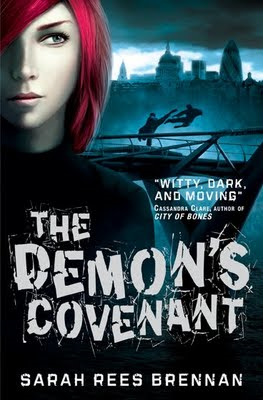
I was a bit reluctant when I realized that Demon's Covenant was written from the POV of a different character than book 1 (book 3 is from yet another), and one that I had mixed feelings about. But I turned out to love being inside her head, seeing her struggles, and I admired her strength. This is my fave of the series mostly for that reason.
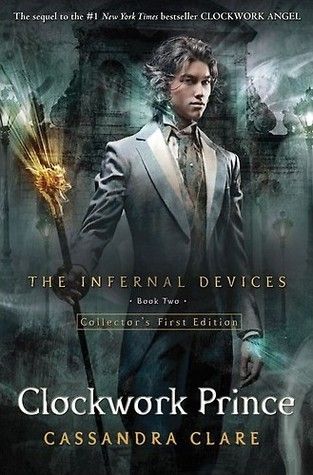
When the reactions for CP started trickling in, I knew I was in for heartache. But nothing could prepare me for the perfection (and the pain) of this book. I'm not usually a fan of love triangles but here it's just perfectly balanced. All three of them love each other, it's not just two guys panting after the same girl and there's no petty jealousy and power games.
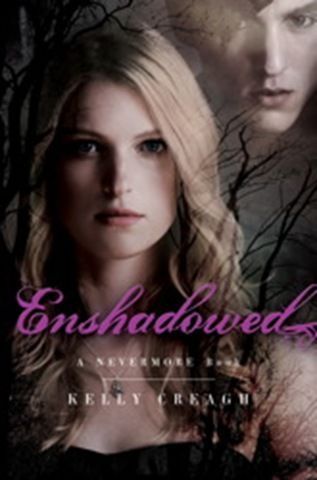
Enshadowed was different from Nevermore in that there was a lot less Varen around... which made me sad, but also allowed Isobel to develop much more as a person of herself, not in relation to some guy, as had been the case before with her ex. Generally with this series I never know what to expect, and I love it!
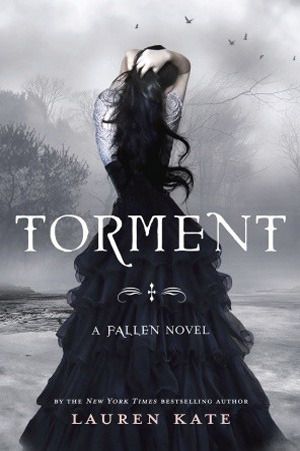
Now I suppose a lot of you wonder 'why Torment?' To be honest, I don't really know how to feel about this series. On the one hand, it's insta-love and YA stereotypes at their worst. On the other hand, it's like a metadiscourse or reflection on insta-love, especially in book 2. Luce mistrusts Daniel, is angry at being out of the loop, and wants to discover things of her own. His 'love of my life and my past life omg he's so amazing' image gets some serious scratches. Because she's the one dying over and over while he just goes on for another 17 years and gets his next chance, where he'll screw up again. I've yet to read book 4, and maybe then I'll have a clearer idea about the series as a whole.

There are a gazillion other amazing second books I could have mentioned here, but many of them didn't take me by surprise as much. I expected The Eternity Cure, Days of Blood and Starlight, Red Glove, and Crown of Midnight to be awesome, and they were. Oh, and I know many had a problem with Insurgent but I think it was a very realistic continuation of what happened in Divergent. I might not have liked everything that happened but it was a logical consequence.

Unfortunately, also for me there are second books that just didn't work out:
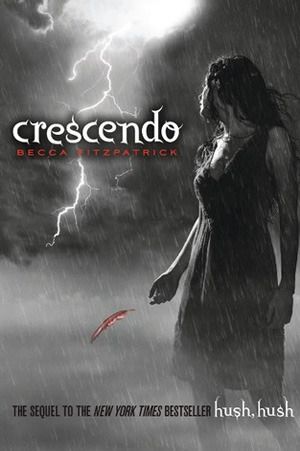


I really enjoyed Hush Hush when I read it two years ago (I got it at a signing on a trip to Ireland) but Crescendo was a big disappointment. My biggest issue was with Nora. Her behavior was stupid and irrational, and her decisions made no sense. I know she's young, but she's supposed to be smart. The magic just didn't happen this time. The book was just full of bad vibes and it really tried my nerves. Silence was somewhat better. I haven't read Finale yet.
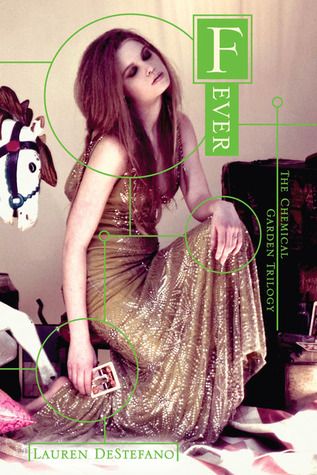
I loved the writing in Wither. The mood and world were incredibly strong to me. While Fever was still good, the characters spent a lot of time in a place I kind of hated and that part dragged for me. On the other hand, there were developments that just had to happen and we got a bigger picture of the book's world and how it works.
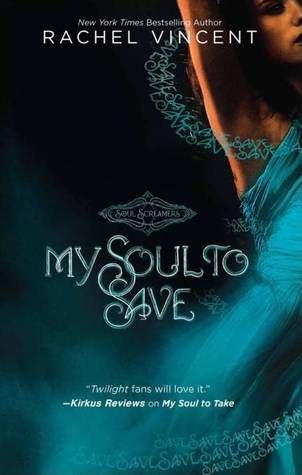
My Soul to Save is not on here because it is bad, but I do think it's the weakest book in the series. The plot just never really pulled me in and I sometimes had problems with Kaylee's reactions. Book 3-7 though? Perfection.
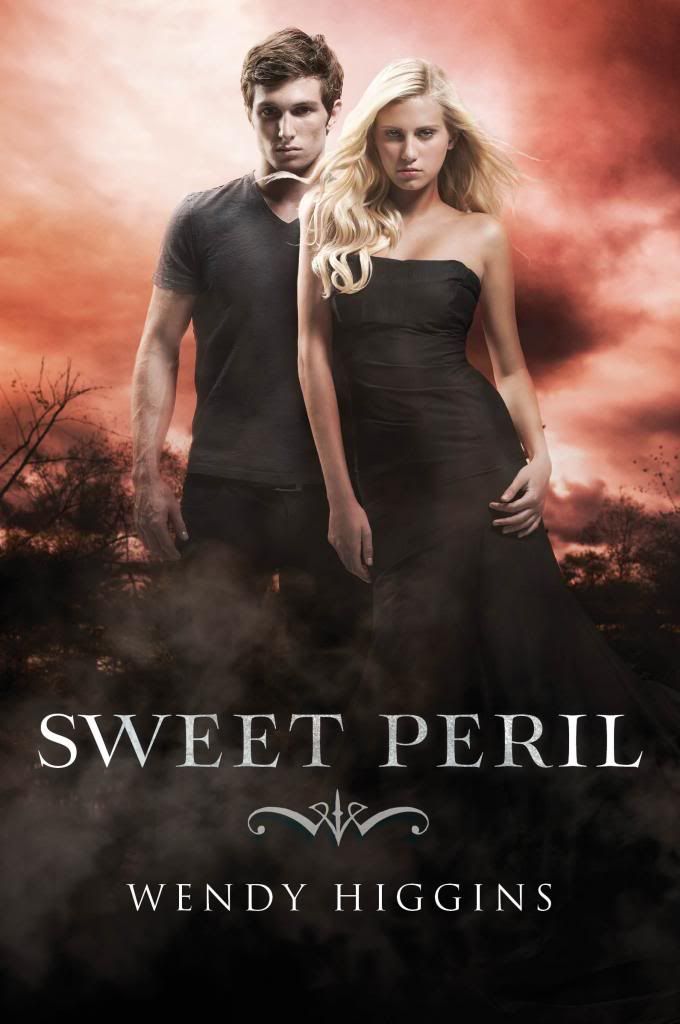
Sweet Peril is a book I was really really looking forward to, especially with it kind of hanging in the air whether Harper would buy it at all. I wanted to love it. I only liked it. Sweet Evil had a way of completely pulling me into the story; it was really intense. Sweet Peril felt like a kind of stagnation. Anna developed some, but the plot was crawling. They're not really much further than they were at the end of book 1. I got to know the characters better and there were scenes and interactions I really loved, but on the whole I'd just expected more, also in terms of and expansion of the world building. I hope book 3 will give me that punch I kind of missed here, though I still enjoyed the this one.

Now why did I compile this second list? Because I don't think that's Second Book Syndrome. It's a mixture me having my expectations not met, them having been way too hyped up, or me having gotten more picky about books. It could have been my mood. It could have been a lot of things. I just think it's a pity if readers, from the get-go, have it in their heads that the second book is going to be a disappointment and won't measure up to the first. Because if you go into the story with that kind of expectation, you will probably find a lot of things to dislike and feel that your expectations were justified, and you might miss parts that were awesome because you're focusing on the negative.

Do any of you share some of my feelings about Second Book Syndrome? Or if you do think second books are often weak, can you explain why? Are my ideas of why some people might feel like that way off or is there something to them? This is an issue I see around the blogosphere a lot for example when there are Top Ten Tuesday posts about sequels, or also in reviews. I'd just like to hear some other thoughts/opinions/theories, so please share and comment?

Thursday, September 19, 2013

Discussion: Do characters/MCs need to be relatable?

As the title says: do you need to be able to relate to a character or like them in order to enjoy a book and form a connection to it?
This is a question I ask myself quite often and that arose a few days ago because I was reading Some Girls Are by Courtney Summers. Regina, the protagonist, is someone I both feel sympathy for (she is first almost raped and then ridiculed, outcast and bullied by her former friends) and despise (she used to bully a lot of other people at her school and since I've been a victim of bullying myself, that makes it hard to like her).

However, I think that tension makes her an even more interesting protagonist. I can connect to her and the story, even though I've never been even close to her actual situation or in the kind of toxic girl-group relationship she is stuck in. I enjoyed the tension between these two sides of her and her struggle against herself and her peers.

So in general I think being able to relate to a character is not all that important to me. I don't even have to like them. It just has to be an interesting, complex character. For instance, I don't think many people like Patrick Bateman from American Psycho, but that doesn't mean he isn't interesting or that the book is bad. In some cases I find myself reading the book to a great part because of the villain (or maybe-villain).

Still, I often read in reviews that people liked a book/character because they could relate to him/her, or that they didn't like a book because they couldn't connect with/relate to/like the protagonist. I think there's also a pressure on authors to write this type of character, and sometimes I feel like it shows. For instance, the character is introduced/constructed in such a way that I feel like the author wanted him/her to be as similar to the anticipated reader as possible so they'd like him/her. If it's that transparent, it actually makes me dislike the character. It somehow feels insincere and  like I'm being sucked up to.

Maybe the fundamental question is what you're reading for. Do you want to find characters with traits that are similar to you, want to find someone who is 'like' you? Or do you want to disappear into a story populated with people who are completely different from yourself? I tend to find difference/otherness/strangeness more interesting than similarity/sameness. But that's just me, and it's not absolutely always the case. I guess in the end it comes down to the quality of the writing.

What's your opinion? Do characters need to be relatable? Likeable? Morally upstanding? Is that necessary for you to connect to the story? Or are there other elements that are more important to you in a book? I'd really like to know :)

Tuesday, August 6, 2013

Discussion: fravorite city-settings in books

Hey guys!

I'm ashamed of the lack of original content on the blog lately .___. I don't even have a good explanation or excuse. I'm just... not really feeling it at the moment and the thought of writing a review gives me an anxiety attack. So I just... read like a maniac. And the books pile up. Hah. Not very productive but I can't not read.

Anyway, since I still couldn't bring myself to review any of the great books I've read lately (doing them justice makes me nervous) I thought of something I'd like to discuss.


Cities I love as settings for books

I grew up in a village of 700 people but since my mid-teens, I've wanted to live in a big city, so when I was 21 I moved to Zurich (biggest city in the country). I love to read about cities. They have so many different places where things can happen and where different types of people converge. There's this sense of energy and possibility. Every city has its own vibe and I think that also flows into the setting of a book.

I've never been to the US, so whenever a book is set in Europe for once, that already makes me want to read it. If it's by a US author and/or if the characters in the book are from the US and traveling to Europe, it's also interesting to see how someone from there sees my continent. One example for that is Just One Day by Gayle Forman.

Other of my favorite European settings are London (because I've been there so when the characters go to certain places, I know what it all looks like and where they are, which is cool and unusual for me) and Prague. I finally got to Prague last summer and that resulted in me being even more into it as a setting. There's just something so old about it, and it has a history of magic and alchemy that I find very appealing. Examples: Daughter of Smoke and Bone, City of Dark Magic, The Book of Blood and Shadows. (I feel like I'm forgetting some...). For London there are just too many to count. Some of my faves: The Infernal Devices trilogy, Kate Griffin's Urban Magic series, Soulless, ACID, Neverwhere, Mrs Dalloway, the Black Butler manga. Feel free to share your own faves!

Other cities I enjoy reading about are Venice and Paris. They give off this romantic or seductive vibe and I especially love them for historical novels, for instance Venom by Fiona Paul. And there's of course Dublin! I love it as the setting for Karen Marie Moning's Fever series.

As for American cities, I like New York as a setting because that city is just so big and full of possibilites, but it can also really drag you down. I'm not such a big fan of an L.A. setting though I'm actually not quite sure why. I'd LOVE to read more books, especially YA ones, set in San Franscisco! I have a big fascination with that city and feel drawn to it, but I've only read very few books set there. So if you have recommendations, bring them on! As soon as I hear about one, especially with a paranormal element, it goes on my TBR automatically. Another city I really enjoy reading about is New Orleans. I love Kelly Keaton's Gods and Monsters series, where she creates her own unique version of the city, and I also love Poppy Z. Brite's books, many of which are set there. And of course there's Anne Rice.

But really, if the author can make me feel like I'm 'there' I can enjoy pretty much any city as a setting. It just has to set the right mood for the story, in my opinion. What I haven't touched on here are made-up cities. There are many of those I love but that would make this topic too vast for me right now... feel free to point some out to me though!

EDIT: Epic fail!! I forgot Tokyo, or Japan in genral. I haven't read all that many books set there (a couple by a Swiss author, Federica de Cesco, as well as Ink by Amanda Sun and the Across the Nightingale Floor books, which were inspired by Japan), it was mostly manga, but I'd looove to read more stories set in Tokyo! Could be historical or contemporary, fantasy or not, I don't care! If you have recommendations, please share :)

So what are some of your favorite city-settings for novels? Are there any that catapult an upcoming book to your insta-buy list? Are there any you really dislike reading about? Or does it not matter to you at all what city a story is set in? If so, I'm interested to hear why!

Friday, July 12, 2013

Discussion: how do you decide in what format to buy a book?

Hey guys :) Time for another discussion!

This topic might be a bit weird, but I've noticed a tendency in my book buying patterns so I wanted to ask what it's like for other people. This mainly concerns people who buy both print and ebooks, but anyone's welcome to join!

So. I used to read only fantasy for about 10 years, but one and a half or so years ago I branched out into YA (with some NA) contemporary novels. I've noticed a peculiar trend though: nearly all my contemporary novels are ebooks!!! I'm not really sure why that is. Maybe it takes more to convince me I want to read the book, so I just put it on the TBR list and buy it when there's a kindle deal? Maybe I'll try to snag it on Netgalley instead? Another reason is that especially NA contemporaries are often self-published, so paperbacks may not be available.

Still, I tend to want fantasy/paranormal in print. I also prefer those covers to the contemporaries quite often, so that might be an additional reason. What can I say, I want the pretty on my shelf where I can look at it and pet it ;P

So what are your buying patterns? How do you decide what you want in print and what you'd rather read as an ebook? Is it totally random or do you tend to buy certain types of books in a particular format?

Thursday, June 27, 2013

Discussion: cheating in giveaways

Hey guys, this time my discussion topic is more related to the everyday stuff of blogging than to actual books.
But it's something that I think all of us bloggers are confronted with again and again:

Giveaway-cheaters: how do you handle them?


I just picked the winner for my Armchair BEA giveaway and was once more forced to delete faulty entries and disqualify people. Saying they follow when they don't, commented when they didn't, people simply writing 'done' into a field instead of copying the tweet-link or even simply putting a dot or a slash in. Seriously?! Do they think I'm stupid? That I don't check, even fleetingly? That if that entry was picked as the winner, I'd turn a blind eye? This is why I always check all the entries before I let random.org pick a winner. If entries like that stay in, they falsify the odds for everyone even if a valid entry is the winner.

But it's not just annoying, it also hurts me and makes me mad, to be honest. I'm not obligated to host giveaways. I pay for them with my own money. I do it because I like to. It's fun, it's a great way to bring awesome books to people (that's why I usually don't do 'book of your choice' giveaways but pre-select a dozen or so), it makes people happy which in turn makes me happy. And since I myself love to enter giveaways, it's a way for me to give back to the community. And yes, I admit it's not bad for the stats. But at the level where I'm at right now, it no longer makes my follower-count shoot up either. I'm familiar with most of the names showing up in the entries by now.

The cheaters won't make me stop hosting giveaways, but they do make me think. In case of the 'done' word in entries, do they maybe not understand the instructions? Is it mean of me to disqualify them? Should I just delete those of their entries that are faulty and leave the rest in? Then again, I don't think the rules are that hard to understand.

Plus, all the entry-checking takes HOURS, especially the GFC-verification. Do you guys have a trick how to do it more quickly? How do you handle this issue? Do you check at all? Do you disqualify? Do you have a 'black list' of notorious cheaters? Do you ever confront them with it if they do it more than once? Do you have a way to prevent cheating in rafflecopter? Do you use a different giveaway/entry form? What's your experience? I'd really like to discuss this with other bloggers, so it'd be great if you could share the link to this post.
And if you're simply a blog-reader and don't have your own blog... have you ever considered this issue? Is what I just said surprising to you or more like 'duh, obvious'? Do the 'hoops' in giveaways annoy you, or do you thik the blogger has a right to ask something of you if they're offering up a free book? I'd like to hear opinions from all sides, so please feel free to comment! State your opinions people, but please do it respectfully.

Friday, May 31, 2013

Armchair BEA: Ethics and Non-Fiction


So today's discussion is about blogger ethics, and though I wasn't super aware of that topic when I first started blogging, after the plagiarism-drama earlier this year that has changed. Giving credit where it is due should be a no-brainer. I've never been plagiarized (to my knowledge) but I've seen what it did to other people and it made me incredibly angry! I'm familiar with it in a more academic setting, I just never thought to extend it to reviews - why would anyone steal another's opinion? It makes no sense to me, and it's not okay in any way! Read the book. Find your own words, your own voice. Sometimes I also avoid reviews of a book I got for review altogether until I've written my own.

Even if you're a new blogger and feel you cannot find the right words yet or that you just have to post tons of reviews to establish yourself... don't go down that road. Someone usually notices the stolen parts, and the fallout isn't pretty. I also can't imagine that you'll feel good about your blog if you know that half the content isn't really yours. If you don't want to put in the work, don't blog.

Also, if you participate in a meme or pick up on someone else's idea, at least give them credit, or even better ask them about it first if it's a more special meme than a link-up such as TTT or WoW. Otherwise it will look like you stole their idea and just went with it, or as if you're trying to pass it off as your own, even though maybe that wasn't what you intended.

Same goes for pictures/graphics. Unless they're stock images or clearly declared as free for the taking, don't just copy and use them. You can get into legal trouble. As far as I know you even have to give sources for pictures of actors or whatever that you're using as examples of how you imagine a particular character in a book. Same goes for elements of another blog's design.

I guess my bottom-line opinion is pretty simple: stay honest, be polite, don't take what isn't yours. I'm by no means an expert and there are people who have been around longer, but those are guidelines I've fared well with. If you have tips to share for those who have been plagiarized and don't know what to do about it, feel free to share them in the comments!


The second topic of today's discussion is non-fiction. 
I don't actually own a lot of non-fiction. The only NF I read is for my studies, so it's usually secondary literature or literary theory. Roland Barthes, Terry Eagleton, some Freud, textbooks on Old English, Middle English, poetry, structure. I think these works are interesting but I wouldn't read them in my free time or for something that doesn't relate to my courses. The only thing I can imagine reading just because is maybe history or social theory of the late nineteenth/early twentieth century, but it would have to be from a cultural/literary perspective.

I've never read guide/advise books because I tend not to trust them or to find their tips rather obvious, nothing I couldn't have figured out on my own. If I needed the info for research, I'd just go to the library and pick the most reliable sources.
I've never read a biography, though if someone can recommend one of Oscar Wilde I'd be interested in that.
I don't know. It's not like I'm 100% opposed to non-fiction, it's just that I like fiction so much better. I want stories. I don't car if they're 'real' or not, they just have to be good, they have to touch me in some way, and non-fiction rarely does that for me.

How do you feel about non-fiction? Can you maybe recommend something? Sometimes the fiction:non-fiction ratio on my shelves embarrasses me a bit.
How about ethics? Do you disagree with something I said, or can you list something I forgot? I'd love to hear your opinion!

Sunday, May 26, 2013

Discussion: Do you cast your characters while you're reading? How do you imagine them?

Hey guys :)

I want to apologize again for being less active lately, both on the blog and on twitter. There's a lot of change going on in my life right now and I'm trying to deal and find a balance. Mostly I'm just losing myself in one book after the other, which leads to reviews piling up, which leads to me sticking my head in the proverbial sand... yeah.

Anyhow, this is a discussion post! I'd like to talk about how we imagine characters in the books we're reading. I've noticed that a lot of bloggers (and also authors) 'cast' the people in the books they read or write, i.e. choose pictures of actors or models they think represent or resemble the character.

I can never resist an opportunity to show off this cover
Apart from the fact that I'd be way too lazy to search through all those pictures of hot dudes and ladies (because let's face it, they usually are good-looking) I admit I personally don't really see the point. When I imagine a character, they never resemble any other person I've ever seen before, be it from my own life or from a movie/advert/whatever. They just pop into my head as I read them. Even if there is no clear description from the get-go, I always have an image in my head that  I can then adapt/concreticize. Before seeing all those casting posts, the idea of looking for that type of pictures never crossed my mind. But I've seen in a lot in guest posts or on authors' Pinterest boards.

The only thing I admit to is that I sometimes 'lift' a character off the cover if I like it a lot. For Nevermore trilogy is someone I imagine pretty much exactly like the guy on the book cover. Same with Daemon from Obsidian, because that guy is so in-your-face everywhere before you even start reading the book that it's impossible to picture him any other way :P
instance, Varen in Kelly Creagh's

So I'm interested... am I the only one who isn't into casting characters? Those of you who do it... why? Or why not? Or how? I'm curious :)
Also more generally, how does the 'imagining characters process' work in your brains? Do you base them on other people? Do you even 'see' the book in your head like a movie at all when you're reading? The reading process is something I find absolutely fascinating and I'd love to hear how you experience it!

Thursday, April 25, 2013

Discussion: what ultimately makes you pick one book over another?

Hello lovelies :)

I've decided to try my hand at a discussion post again and I want to aim at making those a more frequent feature if I can. I really enjoyed the last one, where we talked about romance.

Today's topic is something I think about quite a lot and find really interesting to compare with other poeple.

What ultimately makes you decide you want to read/buy a book?

I'm not talking about finding it vaguely interesting, I mean that moment when you really make the decision 'I am buying this instead of the 10+ others around it' at the bookstore or put it on your 'I really really want to read this' list or the moment you choose it from the unread ones on your shelves. How do you decide what to read and what to pass on?

The cover
I think that's an important point for many people. We do judge books by their covers, for better or worse. Is it pretty? Shocking? Appealing? Does it stand out because of colors/font? Quite often I need only look at the cover to guess the genre.
Personally, I love looking at pretty covers. They often make me pick up a book and turn it around to read the description. But that doesn't mean I auto-buy the book. If I read the description and I'm not convinced, I won't buy the book unless I've read some great reviews. I've heard of people preordering/buying books by virtue of the cover alone though. How do you handle it?

The description
I think that's the most important thing to me. If the book sounds like 3 other ones I've already read (very frequent in YA paranormals/dystopians), I will get bored. If it sounds like tons of drama, I'll put it away. But if it intrigues me, I will buy it no matter how ugly I think fhe cover is. So one of my absolute pet peeves is books who have a lot of review quotes on their back instead of actual info of what they are about! I don't care what these people thought, the publishers only put the positive reviews on there anyway!
How do you feel about descriptions? Do you read them? Does a book sounding similar to another one you've already read make you more or less likely to buy it?

The title
This is tricky. If the cover got my attention, I often don't read the title before I've read the description on the back. I tend to skip big, bold text and get to the details immediately. Weird, I know. I often skip newspaper headlines. However, if the book is not lying on one of those tables but on the shelf, all you have is the title on the back of the book. So then it really depends on whether it sounds interesting to me. Is it funny? Does it have some of my favorite words in it? That will make me pull out the book to see what it's all about.

Length / how 'big' the book is
I don't own this picture. Source.

Some people like huge tomes, others feel daunted by that and prefer thinner volumes. As a teen I felt that anything shorter than 300 pages wasn't worth my time. Now I get fidgety at everything over 500 pages and have learned to appreciate shorter ones. Ultimately though, I don't really care as long as it sounds interesting and is well written.

Reviews / hype
If a book got great reviews from people I trust, I'm more likely to give it a shot even if it's not what I usually read. But I get a bit weary of a book being hyped too much or compared to other, really successful books. ('The new Twilight/Hunger Games!' Even if it has zero to do wit the book that sticker or whatever is on)
How do you feel about that? Does a hype attract you or put you off?

'Instinct'/'Feeling'
I don't know how to properly describe this but it's actually the most important thing to me. Call me superstitious but some books just call out to me. I see them and I know 'I have to read this'. It's like a jolt. When I read the description, I just know that I'm going to love it and I am right about 90% of the time. It's happened a few times that a lot of people got all excited about a title that just made me shrug my shoulders... and then the negative reviews began to trickle in and they pointed out all the bad stuff I had feared about the book.
Does any one else get this type of hunch about books? Or, you know, for some inexplicable reason pull one from the shelf only to think 'oh my god this sounds amazing'? Call me silly but I think that for each of us, there are books we are just meant to read, and they will find their way to us somehow.


There are many more factors that I think come into play, such as having read the author's other work, read an interview, the genre, your mood... feel free to discuss those too, or anything else you think I have forgotten! I'd really love to hear how you pick your reads :)

Friday, March 22, 2013

Discussion: You Want Romance? (Or: what do you read for in books?)

Sorry, I'll get to the point of this post in a sec, I just couldn't resist the lure of this exact wording for my title because there's a song by one of my favorite bands with that name. You can check out the video below, it's part two of a video trilogy (Bullet Theory - You Want Romance? - Juneau). All the videos are beautifully done in my opinion!


Anyway, you aren't here for my opinions on music.
While I have no official discussion feature on my blog at this point, I'd like to start up some conversations or collections of opinions every once in a while on various topics about books, publishing, blogging, reviewing, or whatever other book-related stuff I can come up with.

Something that's been going through my mind for a while is what other people read for in books. And quite often the answer to that seems to be romance. I see many reviews where the plot and pace and all that is mentioned, but the bulk of the review focuses on the love interest and how hot and amazing he is, while the actual heroine seems to recede into the background.

Now, I don't think there's anything wrong with focusing on the romance. Everyone gets what they need out of a book, and there are no wrong or right ways to read. But sometimes it does worry me a bit that the heroine, whom the story is supposedly about, seems to become more of a ploy to introduce the dude? And it's actually more his story than hers, even if it's told from her POV? Personally, I think it's unhealthy when the only/most important thing in a girl/woman's life is her love interest/boyfriend (same for guys being obsessed with a girl). Or think about all those heroines whose life would basically end if he broke up with her because she defines herself over him. Thankfully, I haven't read all that many books like that because I tend to avoid them in advance by reading reviews/descriptions (I can usually tell).

So what my question to you guys eventually comes down to is: do you read for the romance? Would a lack of romance diminish your interest in a book? Is it what you focus on, or are other aspects of a book more/equally important to you? If so, which ones?

As you've probably guessed by now, I'm critical of too much romance. Part of that is, admittedly, because I don't think I've ever really been in love. I just can't imagine having such strong feelings about another person. Maybe I'm a little bitter :P

But more importantly, I tend to find books whose storyline / plot is mostly or only romance boring. Also, repetitive. The names and character properties may vary a little, but very often it all comes down to a relatively small number of possible plots. Sometimes the romance and that super amazing hot dude just seem like a marketing device to sell more books.
I like romance! I like steamy scenes! But please give me a little more. Give me friendship, or family, or a paranormal element or some other kind of conflict that is not focused on the romance! I like the romance in the backdrop, I don't want it to hijack the actual story. It's just often so sappy. Or the guys are too good to be true. Also, a lot of the love interests in YA / NA are starting to sound rather similar to me. And I don't like HEA endings, I want a realistic ending. I want the ending that is best for the story, even if it's bittersweet or hurts me.

What I do read for is often the world building (you might have noticed if you've been following me for a while ^^'). That's why I love fantasy / paranormal books so much. Contemporaries also have world building, but it's less developed because it basically imitates a reality we all know. I just love figuring out the rules and system of a new world, and how it is different from ours, and all the imaginative wonderful details authors put into those world and how they make them seem real to us readers!
But what really makes or breaks a book for me apart from that is characters. I have to be interested and invested in the characters. I actually like them to be different from me - I have to understand them, not necessarily like them or find them 'universally relatable' (whatever that means). I want to feel with them, root for them, ache for them. If I care for the characters, I also like what romance there is a lot better, though I still hope there is more to the story. For instance, Rachel Vincent's books all have romance, and I love them! I also love the romance - because it's done very well, because her characters are wonderful, and because her books abound in elements and plots that are not directly related to the romantic storyline.

I could go on about this for a while longer, but I have to stop my rambling now. Bottom line: I have conflicted feelings about romance, and it's not the main element I read for in books. But what about you guys? Any reactions to my remarks? I think I might have been a little harsh at times, but I just needed to get this out there.
I really want to here about what you think! (Why) do you read for romance? Why not? Would you read a book without a romantic element? What ultimately makes/breaks a book for you?